The remarkable discovery, published in Deep-Sea Research Part I: Oceanographic Research Papers, represents more than just another new species added to the catalog of marine life. This bioluminescent nudibranch (Sea slug) is the third independent evolution of light-producing capabilities among its kind, showcasing how life finds extraordinary solutions to survive in Earth’s most challenging environments.
A Creature from Another World
Bathydevius caudactylus looks like something that might have emerged from a science fiction movie. The creature features a voluminous, hood-like structure at one end of its body that serves as a sophisticated trap for unsuspecting prey. At the opposite end, a flattened tail fringed with numerous finger-like projections gives the animal its distinctive appearance—and provides the source material for its most spectacular survival trick.
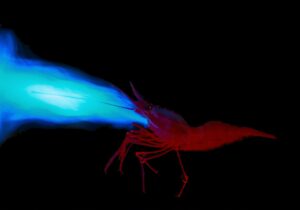
When threatened by predators in the midnight zone—the vast expanse of open water between 3,300 and 13,100 feet below the ocean surface—this remarkable slug can illuminate its entire body with bioluminescent light. But the real show-stopper comes next: the creature can actually detach one of its glowing tail projections, which continues to emit light as it drifts away from the main body, serving as a luminous decoy to confuse and misdirect potential attackers.
“When we first filmed it glowing with the ROV, everyone in the control room let out a loud ‘Oooooh!’ at the same time,” said Steven Haddock, a senior scientist at the Monterey Bay Aquarium Research Institute (MBARI), whose team made the discovery. The moment captures the wonder that even seasoned deep-sea researchers feel when witnessing such extraordinary adaptations.
Engineering Marvels of the Deep
The discovery team, led by marine biologists Bruce Robison and Steven Haddock from MBARI, has been studying this species for years using advanced remotely operated vehicles (ROVs) equipped with high-definition cameras capable of filming bioluminescence in full color—a technological achievement that has only recently become possible.
Bathydevius caudactylus has evolved solutions to all the fundamental challenges of deep-sea survival that would make any engineer envious. While most sea slugs use a raspy tongue called a radula to scrape food from surfaces on the seafloor, this species has developed a completely different feeding strategy. Its cavernous hood functions like a biological Venus flytrap, expanding to capture crustaceans and other small prey that venture too close.
This feeding adaptation mirrors strategies used by completely unrelated deep-sea species, including certain jellyfish, anemones, and tunicates—a phenomenon known as convergent evolution, where different species independently develop similar solutions to environmental challenges.
Breaking New Evolutionary Ground
The significance of Bathydevius caudactylus extends far beyond its individual peculiarities. This species represents the first sea slug known to live exclusively in the deep water column, making it a true pelagic nudibranch—a lifestyle previously unknown among its relatives. Most nudibranchs are bottom-dwellers, crawling along the seafloor and feeding on stationary prey.
The evolution of bioluminescence in this lineage marks the third time that sea slugs have independently developed the ability to produce light, demonstrating the tremendous selective advantage that luminescence provides in the perpetual darkness of the deep ocean. Each instance of bioluminescence evolution represents millions of years of genetic innovation, as organisms develop the complex biochemical machinery required to convert chemical energy into visible light.
“Our discovery is a new piece of the puzzle that can help better understand the largest habitat on Earth,” Robison explained. The midnight zone, where Bathydevius caudactylus makes its home, represents the planet’s largest living space, yet it remains one of the least explored and understood environments.
Advanced Technology Reveals Ancient Adaptations
The discovery of Bathydevius caudactylus was made possible by cutting-edge deep-sea technology. MBARI’s advanced ROVs are among the few research platforms capable of reaching the extreme depths where this species lives while maintaining the sophisticated camera systems needed to document bioluminescent behavior in its natural habitat.
“Only recently have cameras become capable of filming bioluminescence in high-resolution and in full color,” noted the research team. “MBARI is one of the only places in the world where we have taken this new technology into the deep ocean, allowing us to study the luminous behavior of deep-sea animals in their natural habitat.”
This technological capability has proven crucial for understanding not just what these animals look like, but how they actually behave in the wild. Previous deep-sea discoveries often relied on specimens brought to the surface, where the extreme change in pressure and environment made it impossible to observe natural behaviors like bioluminescent displays.
Conservation and Future Research
The discovery of Bathydevius caudactylus highlights both the incredible biodiversity that exists in Earth’s deep oceans and the urgent need for continued exploration and protection of these environments. The species is currently known only from waters off the Pacific coast of North America, but researchers suspect its range may be much broader.
As human activities increasingly impact deep-sea environments through fishing, mining, and climate change, documenting and understanding species like Bathydevius caudactylus becomes ever more critical. The unique adaptations of deep-sea creatures often hold insights that could benefit human technology and medicine, from new approaches to bioluminescent imaging in medical research to bio-inspired engineering solutions.
The research team plans to continue studying this remarkable species, hoping to uncover more details about its life cycle, behavior, and ecological role in the deep-sea ecosystem. Each observation adds another piece to our understanding of how life thrives in some of the most extreme conditions on our planet.