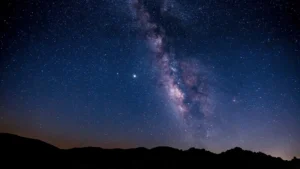
BORREGO SPRINGS, CALIFORNIA – Just two hours northeast of San Diego, California’s largest state park has become an unexpected sanctuary for stargazers seeking escape from urban light pollution. Anza-Borrego Desert State Park earned International Dark Sky Park status in 2018, joining forces with the town of Borrego Springs, California. One of the first International Dark Sky Communities protecting some of the darkest skies accessible to millions of Southern California residents.
The park protects nearly 262,600 hectares (650,000 acres) of Colorado Desert ecosystem, making it the second-largest state park in the United States after New York’s Adirondack State Park. Named for 18th-century Spanish explorer Juan Bautista de Anza and “borrego” (the Spanish word for bighorn sheep), this vast desert preserve offers an oasis of natural darkness surrounded by the bright lights of Los Angeles, San Diego, Palm Springs, and other major metropolitan areas.
Perfect Location Creates Dark Sky Paradise
Anza-Borrego’s location in Southern California’s desert region provides ideal conditions for astronomical observations. The park sits in a natural bowl surrounded by mountains that help block light pollution from distant cities. The Santa Rosa Mountains rise to the north, reaching elevations over 2,400 meters (8,000 feet), while the Vallecito Mountains border the south, creating a protective barrier against artificial light.
The desert’s extreme aridity contributes significantly to its exceptional sky quality. The region receives less than 200 millimeters (8 inches) of rainfall annually, resulting in exceptionally clear atmospheric conditions. This lack of moisture means starlight travels through the air without being scattered or absorbed, allowing even faint celestial objects to remain visible throughout most nights of the year.
Light pollution maps clearly show Anza-Borrego as a dark island surrounded by the bright glow of Southern California’s urban areas. Despite being located in one of the most densely populated regions of the United States, the park maintains Bortle Class 3-4 sky conditions in most areas, with the darkest zones approaching Bortle Class 2 quality during optimal viewing conditions.
Borrego Springs Leads Community Protection Efforts
The small unincorporated community of Borrego Springs, completely surrounded by the state park, became California’s first International Dark Sky Community in 2009. This designation recognized the town’s exceptional commitment to protecting dark skies through strict lighting ordinances and community education programs. Borrego Springs remains the only International Dark Sky Community in California, highlighting its unique dedication to preserving natural darkness.
The town’s population of approximately 3,500 residents has embraced dark sky protection as both an environmental responsibility and an economic opportunity. Local businesses have retrofitted their lighting systems with dark-sky-friendly fixtures that direct light downward rather than allowing it to escape into the sky. Street lights use warm-colored LED bulbs that minimize impact on both human circadian rhythms and wildlife behavior.
The community’s commitment extends beyond lighting modifications to include educational programs that teach residents and visitors about the importance of dark skies. Local astronomy groups organize regular stargazing events, and several businesses offer professional astronomy tours that take advantage of the area’s exceptional sky conditions.
Historic Explorer Connects Past and Present
The park’s namesake, Juan Bautista de Anza, led one of the most remarkable expeditions in North American history. In 1775-1776, this Spanish military officer guided over 240 colonists including families with children, on a dangerous 1,930-kilometer (1,200-mile) journey from Sonora, Mexico to establish the settlement that would become San Francisco.
The expedition passed through what is now Anza-Borrego Desert State Park during some of the most challenging portions of their journey. Anza’s party encountered the same harsh desert conditions that modern visitors experience, including extreme temperatures, water scarcity, and difficult terrain. The route they followed through the Colorado Desert is now commemorated as the Juan Bautista de Anza National Historic Trail.
The expedition included Indigenous guides, Spanish soldiers, Mexican vaqueros, and mixed-race families representing the multicultural character of colonial New Spain. Their successful journey established the first overland route from Mexico to California, changing the course of western American history and demonstrating remarkable courage and determination in crossing forbidding desert landscapes.
Endangered Bighorn Sheep Share Desert Home
The park’s second namesake, the borrego or bighorn sheep, represents one of North America’s most endangered large mammals. The Peninsular bighorn sheep subspecies has been federally listed as endangered since 1998, with only small populations surviving in the mountainous areas of Anza-Borrego and the Santa Rosa Mountains to the north.
These magnificent animals prefer rocky, low-elevation terrain between 90 and 1,070 meters (300 and 3,500 feet) altitude. Male sheep, called rams, develop massive curved horns that can weigh up to 14 kilograms (30 pounds), while females, called ewes, have smaller, straighter horns. Both sexes display remarkable climbing abilities that allow them to navigate steep, rocky terrain that would challenge human mountaineers.
During summer months, bighorn sheep concentrate around water sources, making them more visible to visitors. Popular viewing locations include the Palm Canyon Trail near the park visitor center and areas along Coyote Creek. However, human activity can disturb these sensitive animals, so certain areas are closed to vehicle traffic from June through October to allow uninterrupted access to water sources.
Spectacular Seasonal Wildflower Displays
While Anza-Borrego offers year-round attractions, the park becomes particularly spectacular during wildflower blooms that occur primarily from January through April. The timing and intensity of these displays depend on complex interactions between rainfall, temperature, and seasonal weather patterns, making each bloom unique and somewhat unpredictable.
The park hosts more than 200 species of flowering plants that have adapted to desert conditions. During exceptional years, often called “superblooms,” millions of wildflowers carpet the desert floor in brilliant displays of color. These events can attract hundreds of thousands of visitors and provide significant economic benefits to local communities.
Common wildflower species include desert lupine with purple spikes, bright orange California poppies, yellow desert marigolds, and pink sand verbena. Many desert plants time their flowering to coincide with favorable weather conditions, creating spectacular but brief displays that may last only a few weeks. The combination of wildflower blooms with dark sky viewing creates unique opportunities for both daytime and nighttime natural experiences.
Diverse Desert Ecosystems Support Wildlife
Despite its harsh appearance, Anza-Borrego supports remarkably diverse ecosystems that include natural springs, palm oases, desert washes, and mountain woodlands. The park contains 12 designated wilderness areas that provide additional protection for sensitive habitats and the wildlife species that depend on them.
Visitors may encounter desert animals including roadrunners, golden eagles, kit foxes, mule deer, coyotes, and mountain lions. Smaller species include black-tailed jackrabbits, ground squirrels, kangaroo rats, and various lizard species such as chuckwallas and desert iguanas. The park also hosts the potentially dangerous red diamond rattlesnake, requiring visitors to exercise caution during hiking and camping activities.
Night-active animals take advantage of cooler temperatures and reduced human activity. During stargazing sessions, visitors often hear coyote calls echoing across the desert, observe bats hunting for insects, and may glimpse nocturnal mammals like ringtails and gray foxes. The dark skies that benefit astronomers also provide essential natural lighting conditions for wildlife that have evolved to navigate by starlight and moonlight.
Astronomy Tourism Drives Local Economy
The International Dark Sky Park designation has transformed Anza-Borrego into a premier destination for astronomy tourism, bringing significant economic benefits to the region. Hotels, restaurants, and tour companies throughout the area have developed specialized services for stargazing visitors, including astronomy-themed accommodations and professional-guided night sky tours.
There are “astronomy resorts” that operate dedicated astronomy parks with professional-grade telescopes and star parties featuring presentations by renowned astronomers. These events combine education with entertainment, offering visitors opportunities to learn about celestial objects while enjoying comfortable outdoor dining and guided telescope observations.
Professional astronomy guide Dennis Mammana, who has written about astronomy for over five decades, leads regular night sky tours that have gained national recognition. His programs combine scientific education with accessible explanations that help visitors understand and appreciate the cosmic wonders visible from the park’s dark skies.
Multiple Viewing Locations Offer Unique Experiences
The park’s vast size provides numerous excellent stargazing locations, each offering different advantages depending on viewing preferences and celestial targets. Blair Valley, located in the park’s eastern section, provides some of the darkest skies due to its distance from nearby communities and protection by surrounding mountains.
Font’s Point offers elevated viewing with panoramic vistas of the Borrego Badlands, though its higher elevation exposes observers to more distant light pollution. Many astrophotographers prefer this location for capturing images that combine celestial objects with dramatic desert landscapes illuminated by starlight.
The Badlands area provides unique viewing opportunities in lower elevation washes where mountains help block ambient light from distant cities. These locations require four-wheel-drive vehicles to access but offer some of the park’s darkest sky conditions for serious astronomers seeking optimal viewing of faint deep-space objects.
Best Viewing Conditions and Seasonal Considerations
While Anza-Borrego offers excellent stargazing throughout the year, optimal conditions occur during winter months from November through March. During this period, the desert experiences its driest weather with minimal cloud cover and excellent atmospheric transparency. Cooler nighttime temperatures, often dropping to near freezing, make extended outdoor observations more comfortable for visitors.
Summer stargazing presents both challenges and opportunities. Daytime temperatures can exceed 43°C (110°F), making summer visits potentially dangerous without proper preparation. However, summer nights reveal different portions of the Milky Way and southern hemisphere constellations that are less visible during winter months.
New moon periods provide the darkest conditions for observing faint celestial objects like galaxies and nebulae. However, the park’s exceptional darkness means quality stargazing remains possible throughout most of the lunar cycle, with only the brightest full moon nights significantly impacting the visibility of faint astronomical targets.
Threats Require Ongoing Protection Efforts
Despite its protected status and remote location, Anza-Borrego faces growing challenges from increasing light pollution as Southern California continues to develop. Urban growth in surrounding areas creates expanding domes of artificial light that could gradually degrade the park’s sky quality over time.
Climate change poses additional concerns for both the park’s ecosystems and its value for astronomy. Changing precipitation patterns could affect the regional vegetation and wildlife, while potential increases in atmospheric turbulence might impact viewing conditions for sensitive astronomical observations.
The International Dark-Sky Association works continuously with park management, local communities, and regional governments to maintain and strengthen lighting protection standards. Educational programs help ensure that current and future residents understand the importance of preserving dark skies as both a natural resource and an economic asset.
Accessibility Brings Dark Skies to Urban Millions
One of Anza-Borrego’s greatest strengths lies in its accessibility to major population centers. The park sits just 140 kilometers (88 miles) northeast of San Diego, making it easily reachable for weekend trips or even evening stargazing excursions. Los Angeles residents can reach the park within three hours, while visitors from Palm Springs or Riverside can arrive in under two hours.
This accessibility means that millions of Southern California residents have convenient access to truly dark skies without requiring expensive travel to more remote locations. For many urban dwellers who have never seen the Milky Way clearly, a visit to Anza-Borrego can provide a transformative experience that connects them with the natural night sky that previous generations took for granted.
The park offers various accommodation options ranging from primitive backcountry camping to developed campgrounds with basic amenities. Nearby Borrego Springs provides hotel accommodations, restaurants, and services for visitors who prefer not to camp. This range of options makes dark sky experiences accessible to families, seniors, and others who might find more remote astronomy destinations challenging.
Educational Programs Inspire Future Scientists
Anza-Borrego’s astronomy programs play an important role in science education and public outreach. The park offers regular interpretive programs led by knowledgeable rangers and volunteers who help visitors understand both the science of astronomy and the importance of dark sky conservation.
Monthly stargazing programs provide opportunities for families to experience quality telescope observations and learn to identify constellations, planets, and other celestial objects. These programs often include discussions about light pollution impacts on both wildlife and human health, helping visitors understand why dark sky protection matters.
School groups and youth organizations can participate in special educational programs that combine astronomy with other park resources like geology, biology, and history. These experiences often inspire young people to pursue careers in science and help develop the next generation of astronomers and environmental stewards.
Future Challenges and Conservation Success
The success of Anza-Borrego Desert State Park as an International Dark Sky Park demonstrates that effective conservation can preserve natural darkness even in heavily populated regions. The collaboration between park management, local communities, and astronomy organizations provides a model for other areas seeking to protect their night sky resources.
As Southern California continues to grow, maintaining the park’s dark sky quality will require ongoing vigilance and community commitment. New developments in surrounding areas must incorporate dark-sky-friendly lighting design, and existing light sources may need continued retrofitting to maintain current sky quality levels.
The economic benefits generated by astronomy tourism provide strong incentives for continued protection efforts. As more people discover the wonder of truly dark skies, the constituency for dark sky conservation grows, creating political and economic pressure to maintain and expand protection efforts.
Anza-Borrego represents hope that even in our increasingly urbanized world, places still exist where humans can experience the natural night sky that has inspired curiosity and wonder throughout our species’ history. The park’s success in balancing accessibility with conservation offers a blueprint for preserving these irreplaceable resources for future generations.
Key Takeaways
- Unique Urban Access: Anza-Borrego Desert State Park provides millions of Southern California residents with convenient access to International Dark Sky Park quality skies just 2-3 hours from major cities like San Diego, Los Angeles, and Palm Springs.
- Dual Protection Model: The partnership between the park’s International Dark Sky Park status (achieved 2018) and Borrego Springs’ International Dark Sky Community designation (2009) creates comprehensive protection for 262,600 hectares (650,000 acres) of pristine night sky.
- Historical and Natural Heritage: Named for Spanish explorer Juan Bautista de Anza and endangered Peninsular bighorn sheep (borrego), the park preserves both cultural history and critical wildlife habitat while serving as California’s premier dark sky destination.
Learn More
- Death Valley National Park Offers America’s Darkest Skies with Bortle Class One Rating – Explore how California’s Death Valley provides even darker skies than Anza-Borrego for the ultimate stargazing experience.
- Joshua Tree National Park Mojave Desert Creates Premium Astronomy Destination – Discover how this iconic desert park balances rock climbing fame with exceptional dark sky opportunities.
- International Dark Sky Association Community Certification Protects Night Skies Worldwide – Learn how communities like Borrego Springs achieve and maintain dark sky protection status through lighting ordinances and education.